
The Language Hidden in Every Gesture
The Subtle Language of Movement, Emotion, and Memory That Shapes Every Creature’s World
The Hidden Grammar of Instinct
Every animal speaks a language without words, composed of posture, scent, sound, and rhythm. Long before humans shaped language into form, creatures communicated through instinct. A flicking tail, a tilt of the ear, or the slight lowering of the head carries meaning deeper than vocabulary. This is the hidden grammar of behavior, an unspoken code that connects all living beings to survival and social understanding. Behavior arises not from randomness but from evolutionary wisdom encoded across generations. When a cat arches its back or a bird spreads its wings, it is performing gestures written by time itself. To study these behaviors is to listen to ancient voices echoing through modern life.
Instinct does not act in isolation. It evolves with environment, adapting to climate, territory, and threat. The wolf’s pack order, the dolphin’s synchronized swim, or the ant’s relentless organization all demonstrate intelligence expressed through instinctive choreography. Within each gesture lies history, refined through necessity. Animals carry their ancestors within every movement, guided by inherited memories of survival. Understanding these natural expressions requires humility. It asks humans to observe rather than impose, to recognize that behavior is not a performance but a form of truth spoken through the body. When seen through this lens, instinct ceases to be simple reflex and becomes a narrative of life’s endurance.
The Language of Emotion Across Species
Emotion is often dismissed as a human privilege, yet the eyes of an animal reveal a spectrum of feeling that cannot be denied. Fear tightens the body into flight, joy unlocks motion, and grief slows the pulse of life itself. Science now affirms what observation has long whispered, that animals experience emotion in ways both complex and familiar. The trembling of a horse’s nostrils, the mournful low of an elephant, or the playful bark of a dog are not mechanical reactions but genuine expressions of inner life. Each emotion drives behavior, shaping patterns of trust, defense, and social bonding within their species and, often, with us.
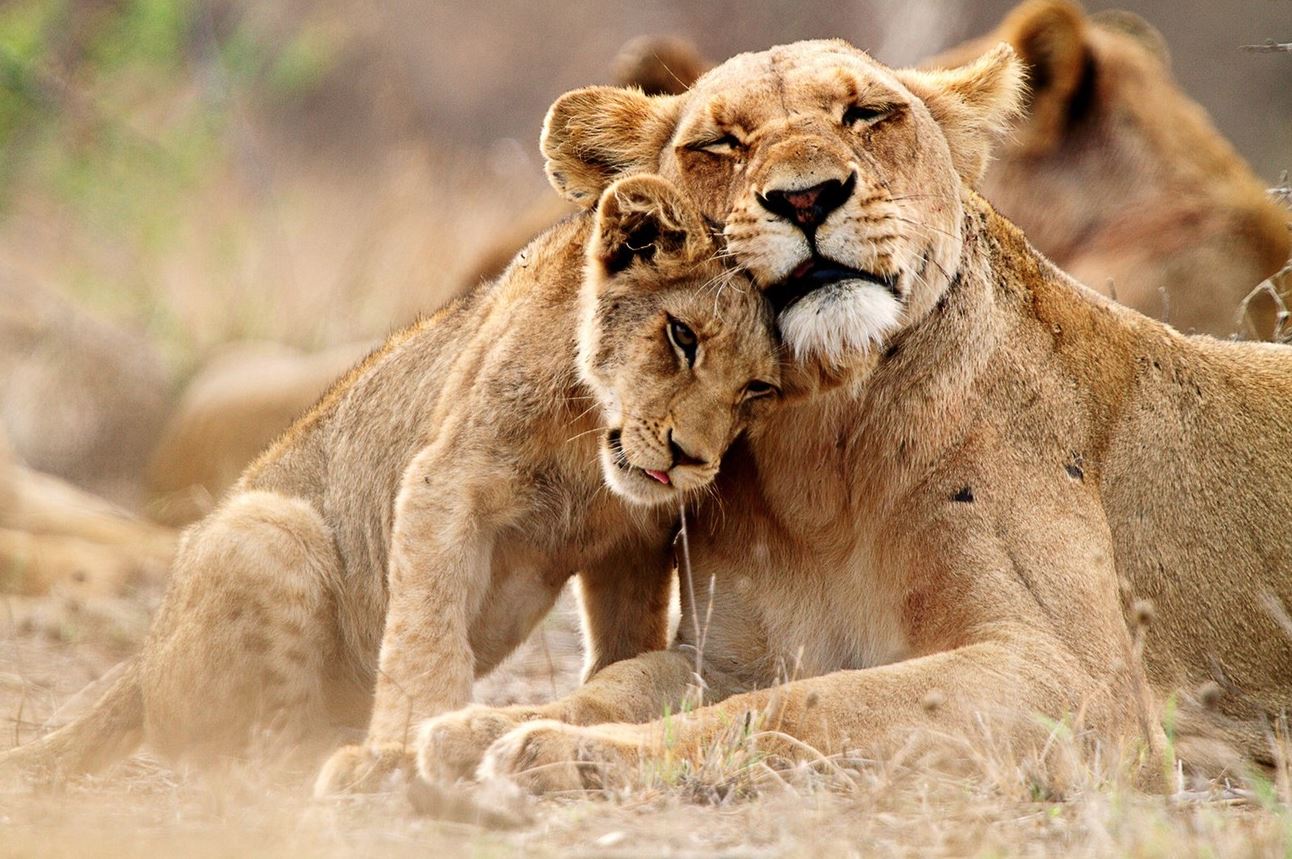
Empathy among animals further deepens this emotional dimension. Dolphins assist the injured, primates share food with companions, and dogs comfort their humans in distress. These acts transcend mere survival strategy. They illustrate emotional intelligence evolving as a form of cooperation and connection. For caretakers and trainers, recognizing emotion as motivation changes how we approach every interaction. Instead of dominance, understanding becomes the tool of influence. In the shared space between heartbeats, communication becomes compassion. This emotional literacy bridges the gap between species, reminding us that the ability to feel is not what divides us but what unites every living thing under the same pulse of life.
Social Bonds and the Architecture of Cooperation
Animal societies mirror human communities in structure, purpose, and hierarchy. From wolf packs to bee colonies, cooperation ensures survival through unity. Hierarchies emerge not from oppression but from organization, where every individual contributes to the greater whole. Within a flock of birds, leadership rotates, allowing energy conservation during flight. Within elephant herds, matriarchs pass down generational wisdom that dictates migration and resource management. Social bonds are the scaffolding of stability, ensuring protection, food, and continuity. The strength of these connections defines the resilience of the species.
Cooperation also fosters intelligence. Studies of primates, dolphins, and corvids show that teamwork enhances problem-solving and adaptability. A group that learns together thrives together. Within domesticated species, social learning manifests in how animals mimic human behavior. Dogs learn routines by observation, parrots recognize emotional tone, and horses sense intention before movement. This shared intelligence forms a silent partnership between human and animal, one that grows through consistency and care. Understanding this architecture of cooperation transforms how we view companionship, it is not a hierarchy but a collaboration born of shared awareness and trust.
The Role of Environment in Shaping the Mind
Every environment acts as both teacher and sculptor, molding behavior through challenge and opportunity. Animals adapt their instincts to suit the rhythm of their surroundings. A fox in the forest learns stealth, while one in the city learns timing. Wild parrots memorize the pattern of rainfall to find food, while captive ones rely on human cues for routine. This adaptability illustrates intelligence at work, the brain’s ability to rewrite itself in response to stimuli. Environment is not a backdrop but a participant in behavior. It dictates what is possible, what must change, and what endures despite alteration.
Captivity and domesticity reveal the powerful influence of setting on psychology. Animals deprived of stimulation may develop repetitive behaviors known as stereotypies, pacing, feather plucking, or self-grooming beyond necessity. These actions are expressions of frustration, not defiance. Providing enrichment, such as puzzles, varied scents, or physical challenges, reawakens curiosity and restores balance. In the wild, enrichment occurs naturally through exploration and necessity. In human care, it must be intentionally crafted. The environment thus becomes the mirror of mental health, shaping not only action but emotional stability. Understanding this dynamic allows caretakers to design spaces that nurture both instinct and intellect, creating harmony between natural rhythm and human presence.
Learning, Memory, and the Spark of Curiosity
Learning defines the difference between reaction and adaptation. While instinct offers the foundation, experience writes the details. Through trial, error, and observation, animals refine their understanding of cause and effect. Memory anchors these lessons, ensuring they are carried into future interactions. A crow that uses a stick to retrieve food does not stumble upon innovation by chance; it remembers. A dog that avoids a harmful plant learns through association. Across species, learning reflects intelligence, but it also reveals consciousness, the awareness that behavior influences outcome.
Curiosity fuels this process. It pushes animals to explore boundaries and test possibilities. Young mammals, especially, learn through play, developing coordination, strategy, and confidence. Play is nature’s schoolroom, disguised as joy. It encourages experimentation without risk, building the cognitive flexibility necessary for survival. Even in adulthood, curiosity persists. It keeps the mind active, the instincts sharp, and the behavior adaptable. To nurture curiosity in animals under care is to honor their nature. It transforms confinement into exploration and routine into discovery. Through memory and learning, animals become not just survivors but thinkers, each thought a quiet echo of evolution’s ongoing dialogue with life.
The Power of Communication Without Words
To communicate without speech requires precision, and animals have mastered it through millennia of adaptation. Body language, sound, and scent serve as instruments in a symphony of meaning. Birds use song to define territory, insects release pheromones to guide colonies, and mammals express affection through grooming or proximity. Each gesture carries purpose, refined for clarity and survival. Humans, often unaware, are constant participants in this exchange. Pets read tone, movement, and emotion long before commands are spoken. Their ability to decode human behavior exceeds our ability to interpret theirs, creating an imbalance that only awareness can correct.
Training grounded in communication rather than control repairs that imbalance. It requires learning to listen through observation. A lowered tail signals unease, a slow blink communicates trust, and a shift in breathing reflects readiness or fear. When humans respond appropriately, understanding deepens. Communication thus becomes two-way, based on empathy rather than dominance. In this dialogue of silence, the illusion of difference dissolves. Both species learn to speak through presence, proving that language is not confined to words but thrives wherever connection exists.
The Shadows of Stress and the Resilience of Adaptation
Stress is as natural as hunger or sleep, a physiological alarm designed to trigger survival responses. Yet prolonged stress transforms from signal into burden. In animals, this manifests as restlessness, aggression, withdrawal, or compulsive behavior. The causes vary, loss of routine, overcrowding, environmental change, or lack of control. Just as in humans, the inability to predict outcomes breeds anxiety. Recognizing and mitigating stress requires reading behavioral cues before distress becomes disorder. The tail tucked, the fur flattened, or the silence replacing song, all are cries for stability in forms we must learn to hear.
Adaptation, however, remains a constant beacon of resilience. Animals possess an extraordinary capacity to recover from hardship when given space and support. Rehabilitation centers around the world witness transformations as rescued creatures relearn trust, reestablish instincts, and reclaim confidence. Healing begins with predictability, gentle exposure, and time. These principles apply equally to domestic life. Consistent schedules, calm environments, and opportunities for control empower pets to rebuild their sense of security. In the study of animal behavior, stress and adaptation stand as opposites that define one another, the reminder that life’s balance is not static but a constant act of recovery and renewal.
Behavior as a Reflection of Bond
When animals share their lives with humans, behavior becomes a mirror of relationship. Every reaction reflects the quality of trust, consistency, and respect exchanged daily. A dog’s obedience stems not from submission but from loyalty earned through fairness. A parrot’s chatter emerges from social fulfillment, not mere mimicry. Even a cautious cat that approaches slowly reveals the courage born of patience shown by its human. Behavior, in these cases, ceases to be an academic subject and becomes a measure of empathy. It tells us who we are to those who rely on us, revealing the invisible threads of connection woven through care.
Bonding reshapes perception for both species. Humans begin to notice subtleties once overlooked, while animals learn to read gestures once unfamiliar. The rhythm of shared life teaches synchronization, where routine becomes ritual and presence becomes reassurance. Over time, mutual understanding evolves into something greater than habit, it becomes harmony. Behavior becomes the language of that harmony, an ongoing conversation expressed in movement and response. Through this bond, both sides learn that love is not spoken but lived, defined by attention and patience rather than possession. It is in this exchange that companionship transforms into coexistence, rooted not in control but in trust.
The Harmony Hidden in Every Gesture
At its core, animal behavior is the poetry of existence written in motion. It is a living language that reveals the unity between instinct and emotion, thought and survival. To observe it is to glimpse the architecture of life’s intelligence at work. Every wag, every chirp, every stillness carries intention shaped by countless generations. By studying and respecting these patterns, humans rediscover their place within the wider circle of life. The lesson remains timeless: to understand another creature, one must first listen without expectation. Beneath the fur, feathers, and scales lies a truth that mirrors our own, that behavior, in all its complexity, is the purest expression of being alive.